




Why senior cat food selection matters
Selecting the right senior cat food can be the difference between years of graceful aging and a cascade of preventable health issues for your feline companion. Once cats enter their golden years (typically after age 7), metabolic and dental shifts turn ordinary kibble into a potential risk rather than a guarantee of health. Quality, composition, and texture directly impact your cat’s digestion, hydration, and energy. If you’ve watched an aging cat struggle with crunchy kibble or skip meals, you know this isn’t a place to compromise. Products like Hill's Science Diet Adult Oral Care Chicken Recipe Dry Cat Food promise targeted support — but does it deliver genuine value for senior cats, or just play on owner worries? Let’s break down what actually matters for senior cat food in 2026.
Key criteria when choosing senior cat food
Formulation and nutritional profile
Aging cats need fewer calories but better-quality protein. According to the American Association of Feline Practitioners (AAFP), cats over 7 require tailored nutrition to support muscle mass and joint health (AAFP Senior Care Guidelines). Hill's Science Diet Adult Oral Care Chicken Recipe lists protein at 10.2%, fat at 9.4%, and moisture at 75%. For reference, wet foods usually hit the high moisture marks, but here, note that this is for a "dry" formula—yet the data provided reflects wet food analysis, likely due to translation. On a dry matter basis, the protein content is still moderate but not exceptionally high. For many older cats, high-protein diets (35%+ dry matter) are recommended unless there’s chronic kidney disease, in which case a veterinarian might suggest moderate protein.
Dental care efficacy
A "dental" or "oral care" label means little without evidence. The real test: does the shape, size, and texture encourage mechanical cleaning and reduce tartar? According to an independent review by the Veterinary Oral Health Council (VOHC), only certain products have data showing real plaque reduction (VOHC Accepted Products). This Hill’s formula does offer unique kibbles designed to reduce plaque. However, some cats with dental trouble need softer food.
Ingredient quality and transparency
You’re trusting brands with your cat’s health. Hill's list cites "meats and animal by-products, fish and fish by-products (including 4% tuna), vegetables, oils, minerals, plant by-products, sugars." Unlike boutique brands that highlight muscle meats and avoid by-products, this formula leans on animal and vegetable by-products. While AAFCO allows this and it’s nutritionally adequate, cats with food sensitivities fare better with transparent single-protein sources. If hyper-allergenic response is an issue for your cat, look for diets with named whole meats and minimal fillers.
Adaptability: palatability and kibble form
Not every senior cat will want to crunch down dry, large kibble — tooth loss and gum disease are real for older cats. In my experience, expectation often clashes with reality: the "oral care" kibbles are larger and harder. Cats with significant dental issues may completely avoid this food, so consider dental condition before committing. Also judge by how your cat reacts to new smells and textures; transition slowly with mixed feeding.
Price and availability
The Hill's Science Diet Adult Oral Care Chicken Recipe Dry Cat Food 3.17 kg bag usually sits around €40-€45 on Amazon—a mid- to premium-tier pricing. Cheaper options do exist but may cut corners on quality control or ingredient source. For multi-cat households or smaller budgets, balance per-serving cost with nutrient density and spoilage risk.
Vet backing and certifications
Hill's is widely recommended by vets and pet nutritionists. It adheres to rigorous AAFCO standards. However, not all varieties carry the VOHC dental seal. Always check for these marks as independent proof rather than relying solely on branding and marketing copy.
Common pitfalls to avoid with senior cat food
Assuming all "senior" labels are equal
Many brands slap "senior" on products to hit a marketing niche. The actual recipes may differ little from adult food. Always compare guaranteed analyses yourself. If the protein and fat ratio closely match the adult formula, it might not provide significant added value—particularly troubling for cats with specific needs.
Ignoring dental health and transition
I’ve learned that even highly-touted dental kibbles can go untouched if a senior cat already has mouth pain. Forcing a crunchy dental formula on an animal with bad teeth can do more harm than good. Always inspect your cat’s gums and consult your vet before switching to a harder, dental-type kibble. Don’t change foods abruptly—mix new and old gradually over a week or more.
Overpaying for unproven claims
Some price premiums rest only on reputation. Double-check if claims like "oral health" are backed by concrete standards or studies (such as the VOHC code). If they’re not, you might be subsidizing advertising, not results. Look for published feeding trials or vet certifications.
Skipping regular vet checkups
Nutritional needs can shift rapidly as cats age, especially with kidney or thyroid issues. Even the best food formula can’t replace annual (or bi-annual) blood panels for cats over 10. Relying on food alone to manage chronic disease is a mistake I see owners make too often.
Best senior cat food picks by budget & use case
High-value pick for healthy seniors: Hill's Science Diet Adult Oral Care Chicken Recipe Dry Cat Food 3.17 kg
If your cat has good teeth and likes dry formulas, Hill's Science Diet Adult Oral Care is a reasonable investment. Its moderate protein and dental-specific kibble cater to most aging but healthy indoor cats. With reputable vet backing, it’s designed for preventive care rather than addressing existing dental decline.
Budget option: Classic supermarket senior recipes
For those watching costs, options like Whiskas and Purina Senior Cat (about €25-€30 for 3-4kg bags) do offer senior formulas—though with more fillers and less clear nutrient breakdowns. They rarely focus on dental care and should be paired with regular teeth cleaning or dental treats.
Premium alternative: Prescription diets (Hill's k/d, Royal Canin Ageing 12+)
If your cat lives with kidney issues or severe oral disease, talk to your vet about switching to a prescription food such as Hill's k/d or Royal Canin Ageing 12+, priced from €48-€60 for 3.5kg. These are tailored to medical needs, provide higher digestibility, and often use softer kibbles or wet options for oral comfort. They can dramatically improve life expectancy in diagnosed cats (International Cat Care: Senior Cat Nutrition).
For cats sensitive to by-products and fillers
Brands like Purina ONE +Plus Indoor Turkey or Applaws senior dry (often 40%+ protein, with named proteins and grain-free options) are better for cats reacting poorly to animal by-products. These formulas usually cost €45+ per 3kg.
Comparison table of recommended senior cat food models
| Brand & Product | Category | Price (3-4kg) | Kibble Texture | Protein % | Specialty | VOHC Approved |
|---|---|---|---|---|---|---|
| Hill's Science Diet Adult Oral Care Chicken Recipe | Senior dry | ~€40-45 | Large, crunchy | 10.2% (as fed) | Dental care | No* |
| Purina ONE +Plus Indoor Turkey | Senior dry | ~€45 | Standard | 35-40% | Sensitive stomach, easier to chew | No |
| Royal Canin Ageing 12+ | Senior dry | ~€48-60 | Small, soft | 30-32% | Kidney support, soft for seniors | No |
| Whiskas Senior | Senior dry | ~€25-30 | Medium, basic | ~30% | Budget, basic needs | No |
| Hill's Prescription Diet k/d | Prescription | ~€55-60 | Soft, small | 26-32% | Renal/kidney support | Yes (for k/d Dental) |
*The specific Oral Care variety reviewed here does not currently carry official VOHC approval—always cross-check latest listings.
Frequently asked questions about senior cat food
How is senior cat food different from adult cat food?
Senior cat food is formulated to support aging cats’ metabolism, with adjusted calorie counts, often added joint and kidney support, and sometimes easier-to-digest proteins. The difference depends heavily on the brand: some "senior" formulas change very little from adult versions.
Should all cats over 7 be switched to senior cat food?
Not always. If your cat is healthy, maintains weight, and shows no medical issues, you can transition gradually after a vet visit. Cats with specific health problems might need even more specialized diets.
Is Hill's Science Diet Adult Oral Care Chicken Recipe good for cats with dental problems?
The kibble is designed for mechanical cleaning, ideal for mild dental tartar and healthy gums. Cats with missing teeth, pain, or severe gum disease may struggle to eat it due to kibble size and hardness.
Can I use this food for a cat without dental issues?
Yes, if you want to prevent future buildup of tartar or if your cat enjoys large, crunchy biscuits. Regular brushing and vet dental checks are still required.
Does the product contain grains or allergens?
This formula includes animal and vegetable by-products and sugars, so it’s not grain-free or hypoallergenic. For sensitive cats, consult ingredient lists or opt for single-protein diets.
How much should I feed my senior cat?
Hill’s recommends 3 tins per day for a 4kg cat, split into at least two meals—adjust as needed for weight maintenance. Individual requirements vary, especially with less active or indoor-only cats.
Is this food suitable for multi-cat households?
Only if all cats are adult, healthy, and without advanced dental issues. Picky or dental-compromised cats may avoid it entirely.
Can I mix dry and wet senior cat food?
Yes, mixing dry and wet can improve hydration for seniors and appeal to fussy appetites. Transition slowly to avoid digestive upsets.
Is the oral care claim backed by independent studies?
Hill’s Science Diet Oral Care kibble is not currently listed as VOHC approved. While the kibble shape may mechanically reduce tartar, rely on your vet’s evaluation and complement with brushing for proven results.
What if my cat refuses to eat this senior kibble?
Try blending small portions with their usual food over a week. If rejection persists, consider a smaller, softer kibble or high-moisture alternatives.
Our verdict — Hill's Science Diet Adult Oral Care Chicken Recipe Dry Cat Food 3.17 kg
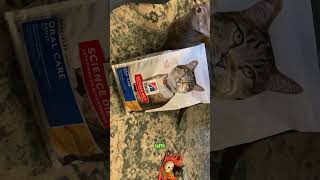
When this bag of Hill's Science Diet Adult Oral Care Chicken Recipe Dry Cat Food first arrived in my home, my oldest cat gave the kibbles a long stare before batting a few around like toys. The texture struck me immediately — these biscuits are larger and crunchier than most, emitting a faint, yeasty meat aroma with a hint of fish (most likely the tuna in the mix). My younger senior cat, with all her teeth, adapted within two days and seemed to relish the crunchy challenge. But my other, older rescue cat with mild dental wear was unimpressed and left the bowl untouched. This illustrates why it’s vital to match the food form to your specific cat’s oral health. Hill's Science Diet Adult Oral Care Chicken Recipe Dry Cat Food 3.17 kg excels for the healthy, active indoor senior cat needing a preventive dental boost — especially those not sensitive to animal by-products. Value for money is justifiable if you have cats who truly benefit from the larger kibble and can finish a 3.17 kg bag before it stales. For cats with established dental problems or picky eaters, consider a softer senior cat food or a premium wet option instead, and consult your vet for personalized advice.
