


Why Choosing the Right Cat Stairs Matters
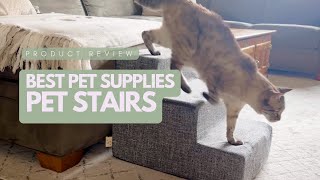
Cats are agile, but not invincible—especially as they age or face mobility issues. If you share your home with small cats, seniors, or pets recovering from injury, access to high surfaces becomes a daily struggle. Cat stairs aren't a luxury in these cases; the right model protects joints, preserves confidence, and lets your feline friend remain part of the family action. Choosing quality stairs like the 3 Tiers Dog Stairs and Ramp for Small Dogs, Non-Slip Pet Stairs for Beds Or Couches, Pet Steps for Injured Dogs, Elderly Pets, Small Cats, Easy to Walk can determine whether your cat adapts easily or avoids them altogether. I’ve seen my own cautious rescue grow braver with the right steps by her side.
Key Criteria for Selecting Cat Stairs
Gentle Slope vs. Steep Steps: The Must-Have Difference
Traditional pet stairs often have steep, right-angled steps—great for agile young dogs, but daunting for many cats. The featured 3 Tiers model uses a gentle slope, significantly easing the strain on aging joints and boosting confidence for hesitant, small, or injured cats. A ramp-style incline often encourages use where steps fail (Feline Advisory Bureau). Always check the rise height: look for increments no higher than 13–15cm (5–6") per tier for most small cats.
Materials and Structural Strength
High-density foam, as used in this model, offers a stable but forgiving surface. Foam retains its shape even after months of use, supporting up to 25-30lbs comfortably—ample for single or multi-cat homes. Hard plastic or flimsy wood may either slip on floors or become unsteady under weight. I always recommend foam-core stairs for indoor cats who dislike loud surfaces or sudden shifts. If you have larger breeds (Maine Coons, hefty British Shorthairs), check exact weight limits.
Non-Slip Surfaces — Not Negotiable
Never compromise here. Cats, especially with reduced mobility, cannot safely use stairs that shift or slide. The double non-slip design of this product—velvet-textured tread plus a non-slip base—is an instant improvement over budget imitators. In my house, even a playful push from one cat hasn’t budged it. The velvet surface also feels welcoming under paw, which matters more than you’d think.
Size and Space Requirements
Measure, measure, measure.^1 For beds or couches, ensure the stairs reach the height you need (normally 35-45cm for couches, 50-60cm for typical beds). This 3-tier model is suited for beds under 55cm (21")—it won’t help with lofted bunks. Check length as well; a gently sloping ramp will be longer than steep stairs, so allow floor space accordingly. If your space is tight, prioritise a compact model with the same slope benefits.
Cleaning and Durability
No one likes fur-matted, stained stairs. The removable and washable cover of this foam stair system saves hours and preserves a hygienic environment. Some cheap designs glue the fabric on, trapping dirt and making cleaning a pain. Always check for a zip-off or easy-pull cover.
^1 International Cat Care advises measuring with your cat in mind, not just furniture.
Common Pitfalls to Avoid with Cat Stairs
Many owners waste their money on stairs that end up in storage closets. From experience—and mistakes—here are the top errors to avoid:
1. Choosing Dog-Specific Steps with Too-Steep Rises
Dog stairs are often marketed for cats, but cats’ stride and hesitancy are different. If the steps are too high or sharply angled, your cat will ignore them or, worse, jump off mid-way. A gentle slope, like on this 3 Tiers ramp, is vastly superior for small cats or seniors.
2. Overlooking Anti-Slip Features
If the base isn’t grippy, or the tread feels smooth, every wild leap or awkward descent becomes a hazard. Too many “bargain” units include no decent anti-slip. Watch out for smooth plastic or wood bases and felt “stickers”—they don’t work on wood or tile floors.
3. Underestimating Cat Skepticism
Cats are not small dogs. Many refuse new territory for days if the stairs look or feel odd. Too-stiff foam, noisy plastic, or a wobbly frame will doom your investment. Cats trust soft, stable surfaces. Don’t cheap out on build quality.
4. Not Checking Length vs. Floor Space
A slope that’s too long can block walkways, while too-short stairs will force your cat to leap the final distance—a recipe for failed adaptation. Always weigh both the vertical and horizontal dimensions in your available space.
5. Ignoring Cleaning Needs
Fixed fabric gathers hair, dust, or litter bits fast. Pick a cover that you can toss in the washer. Your nose (and your cat’s allergies) will thank you.
Our Picks by Budget: Cat Stairs for Every Household
Entry-Level (Under $35)
Best for: Healthy, agile cats with minor height gaps (under 40cm/15")
- Often basic foam or lightweight plastic.
- May have a rougher fabric cover or minimal anti-slip.
- Works for kittens but not for elderly or disabled cats.
- Expect limited durability.
Mid-Range ($40–$60)
Best for: Elderly, small, or cautious cats needing a soft, gentle ascent for standard beds/couches (under 55cm/21")
- High-density foam with better form retention, as seen in the 3 Tiers Dog Stairs and Ramp for Small Dogs, Non-Slip Pet Stairs for Beds Or Couches, Pet Steps for Injured Dogs, Elderly Pets, Small Cats, Easy to Walk.
- Velvet or plush cover plus upgraded non-slip base.
- Removable, washable fabric—crucial for hygiene.
- Reliable for pets under 25–30lbs.
- Particularly useful for older cats or those recovering from spay/neuter or leg injuries (WSAVA^2 recommends stair or ramp use in post-op settings).
Premium ($65+)
Best for: Large cats, multi-cat households, or those seeking lasting, furniture-matching fixtures
- Steel frame or furniture-grade wood trim.
- Extra-stable, supports cats >30lbs (Maine Coons, chubby seniors).
- May include storage space or foldable design.
- Best if style matters or you regularly move the stairs around.
^2 World Small Animal Veterinary Association, 2025 guidelines
Cat Stairs: Comparison Table of Top Models for 2026
| Model Name | Price Range | Slope/Step Type | Material | Max Weight | Anti-Slip Surface | Washable Cover | Best for |
|---|---|---|---|---|---|---|---|
| 3 Tiers Dog Stairs and Ramp for Small Cats (B0BLKN98V6) | $45–$55 | Gentle slope, 3 tiers | High-density foam | Up to 30lbs | Velvet + base dots | Yes | Small, elderly, injured cats, beds up to 55cm |
| Generic Compact Cat Steps | $25–$35 | Steep/short steps | Basic foam/plastic | Up to 15lbs | Mild felt | Sometimes | Kittens, agile short cats, low couches |
| Deluxe Wood Frame Pet Stair | $65–$90 | Gentle/flat steps | Wood + carpet | Up to 40lbs | Rug/carpet | Removable pads | Multi-cat or large breeds, furniture-conscious |
Frequently Asked Questions
How do I choose the right size cat stairs for my bed or couch?
Measure from the floor to the top of your bed or couch, then check the height of the stairs. For best results, pick stairs with a height within 2-4cm (1 inch) of your furniture. It’s better to slightly overshoot than force your cat to jump the last gap.
Will my cat use stairs originally designed for small dogs?
Many cats will, but only if the rise is gentle, the tread is soft, and the surface is secure. Products like the 3 Tiers Dog Stairs and Ramp for Small Cats are specifically adapted for feline reluctance with their soft, gradual slope.
Do cat stairs work for cats with arthritis or joint problems?
Yes, provided the stairs feature a gentle incline and supportive surface. Vets recommend ramps or low-rise stairs (13–15cm/5–6” per step) to minimize strain for arthritic cats.
How can I introduce my cat to new stairs or ramps?
Place treats or toys on the first step to encourage curiosity. Avoid forcing your cat. Most cats will gradually explore new ramps, especially if the material feels familiar and soft.
Are foam stairs durable for daily cat use?
High-density foam, like in the 3 Tiers model, holds its shape well and withstands years of use with average cats (under 30lbs total load). Lower-density foam may deform or sink after a few months.
How do I clean cat stairs effectively?
Opt for stairs with a removable, machine-washable cover. Regular vacuuming and washing the cover every 2–3 weeks prevents fur buildup and odors.
Do non-slip stairs help anxious or skittish cats?
Absolutely. A stable, non-slip ramp reduces the risk of slips and the New Experience stress. Velvet tread and rubberized base help cats feel safe on every ascent.
Can two cats share the same set of stairs?
Yes—if the stairs are wide and sturdily built, like the 3 Tiers foam model. For heavier pairs, confirm that max load is not exceeded. Observe initial sharing sessions to ensure no territorial disputes.
Will these stairs fit under my bed when not in use?
This model is not foldable and is designed for active placement beside furniture. If you need stowable stairs, look for a collapsible design at the premium tier.
Are there alternative solutions if my cat refuses all stairs?
In some cases, a wider ramp or strategic furniture placement (like benches close to sofas) can help. Consider reading our cat fence escape prevention guide for tips on feline movement and safety.
Our verdict — 3 Tiers Dog Stairs and Ramp for Small Cats
What struck me on day one was the sheer firmness of the high-density foam beneath my hand. My more timid cat, who hates rattling objects and avoids unfamiliar textures, sniffed the velvet surface and stepped up almost right away—gingerly at first, then with her usual clumsy eagerness. The three-tiered gentle slope felt natural to her: she actually chose the stairs over her old hop for the first time in months. The removable, catch-every-hair cover is a cleaning life-saver; with regular washes, the stairs both look and smell fresh. This product is ideal for small indoor cats over 7 years, injured felines recovering from surgery, or any household where confidence on stairs is an issue. If your cat weighs over 30lbs, or you need something foldable, look elsewhere. For the mid-range price, I’d call the value excellent—sturdy, supportive, and feline-friendly. Budget-minded owners could opt for a cheaper version, but you’d sacrifice stability, comfort, and long-term usability.
